
What You Need To Know About Having A Tooth Extracted
At the office of Attune Dentistry, our patients' care and well-being are our top priorities. While we do everything we can to preserve the integrity of your natural smile, it's sometimes necessary to extract a tooth to protect your oral health and overall well-being. Some of the most common reasons our office may recommend having a tooth extracted include:
- Over-retained or severely decayed baby teeth – Baby teeth that fail to fall out on schedule can disrupt the development and alignment of your child's smile.
- Non-restorable permanent teeth – When a tooth has sustained far too much structural damage from decay and cannot be restored, extraction may be required.
- Severely fractured or cracked teeth – When too much tooth structure or the root has been compromised, an extraction may be necessary.
- Advanced gum disease – Untreated periodontal disease can lead to loose teeth that ultimately require extraction.
- Poorly positioned or impacted wisdom teeth – Many wisdom teeth do not have sufficient room to erupt or cause issues for adjacent teeth.
- Overcrowded teeth – As part of an orthodontic treatment plan, extraction of select permanent teeth may be required.
How is a tooth extraction performed?
Whatever the reasons for a dental extraction may be, you can rest assured that your care is in the best of hands at our office. Our dentist will review your medical and dental histories, discuss any special considerations, and perform a comprehensive examination with digital radiographs.
What Is A Simple Extraction?
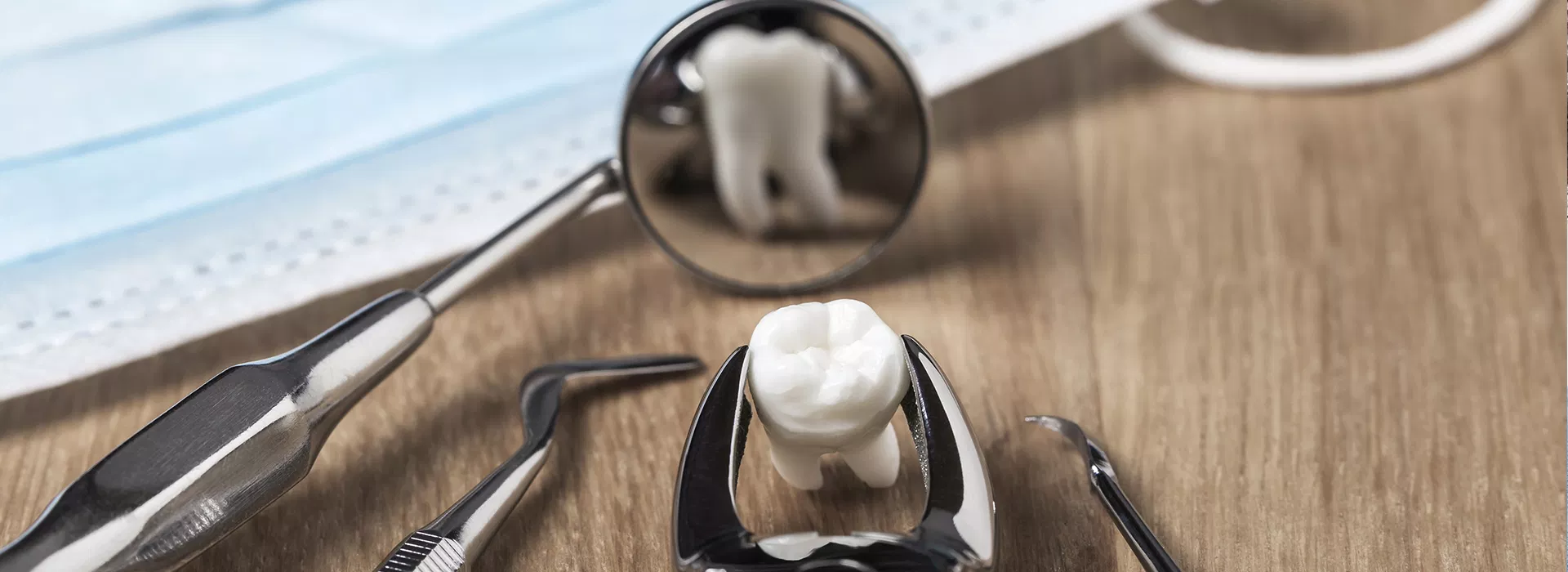
When the tooth is clearly visible in the mouth and the root anatomy is straightforward, it usually falls into the category of a simple extraction. Once the tooth and surrounding tissues are sufficiently numbed with local anesthetic, our dentist will loosen any attached periodontal tissues and apply forceps to remove the tooth.
What Is A Surgical Extraction?
For teeth that are severely broken down, anklylosed, or impacted, a surgical extraction is often indicated. During a surgical extraction, a small incision in the soft tissues and localized removal of overlying bone provides greater access to remove the tooth. We may refer you to an oral and maxillofacial surgeon for this procedure.
Post-Op Care Following An Extraction
- Maintain gauze pressure – Bite down on gauze as instructed to control bleeding.
- Protect yourself until anesthesia wears off – Avoid biting lips, cheeks, or tongue.
- Take medications as prescribed – Complete any antibiotic course and manage pain as directed.
- Facilitate healing – Do not rinse, spit, or use a straw for the first day or two.
- Apply ice – Use an ice pack for 10-minute intervals during the first day to control swelling.
- Avoid smoking – Refrain from tobacco products for the first week.
- Watch your diet – Stick with soft foods and plenty of fluids for the first few days.
Why choose the office of Attune Dentistry?
You deserve quality care that's personalized to meet your individual needs. We deliver precise and gentle care, keeping you informed and relaxed throughout your procedure. If your tooth needs to be replaced, we'll discuss your best options, including dentures, fixed bridges, and dental implants.